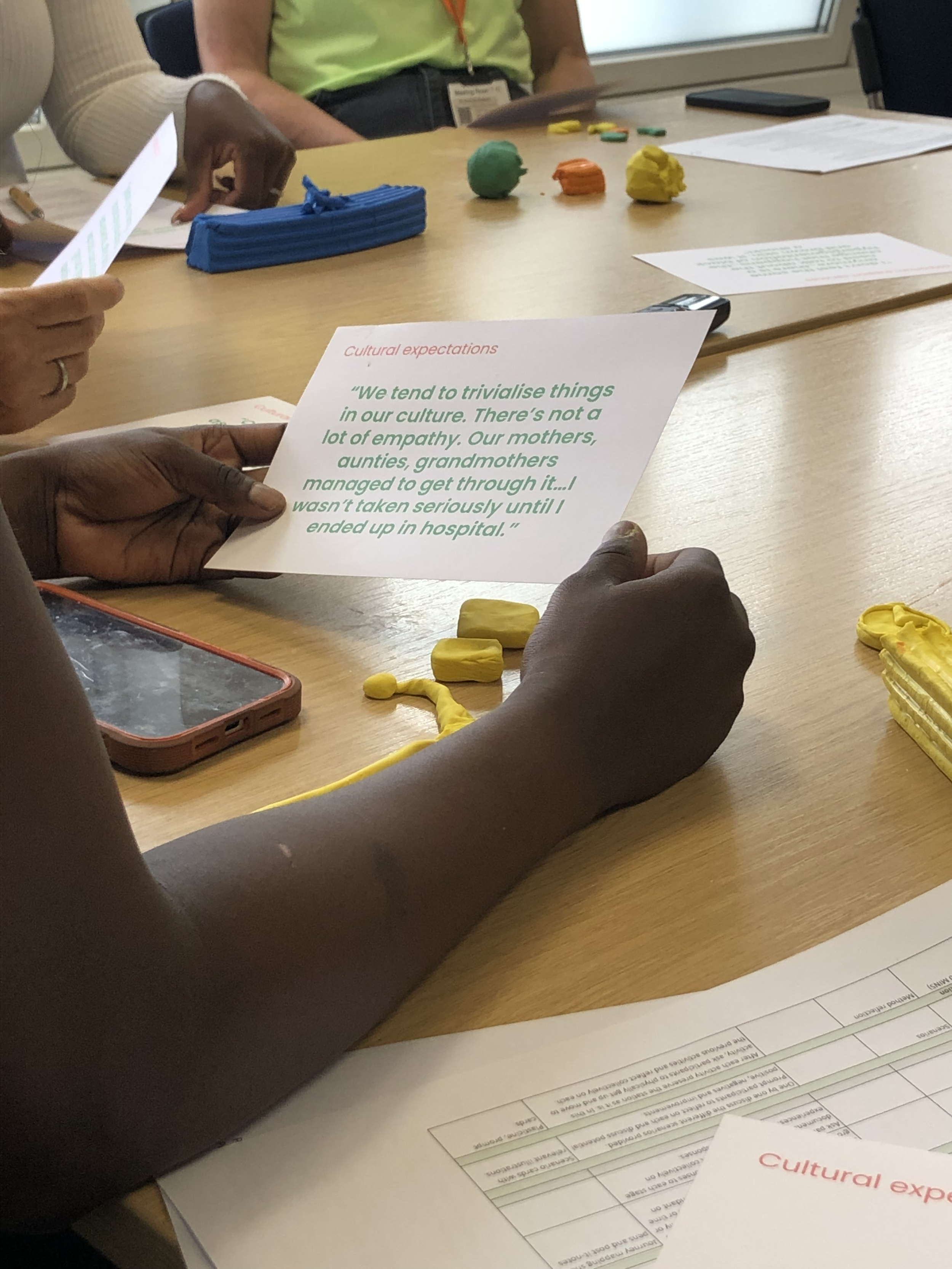
Workshop with Food for Purpose
We recently came together with Food for Purpose and community members to begin designing a postpartum support service for the local community, focusing on the needs and experiences of Black women in the period after birth. We used plasticine modelling to bring experiences into the room and to draw on data that had been collected earlier, and we worked with journey mapping and scenarios to follow how women move through care and to imagine how that support could be different.
Working through these methods together showed us how much the choice of method changes what gets said, like how a particular material can invite someone in or hold them at a distance, and how the same prompt gets very different responses depending on who is in the room. These observations feed directly into our wider question of how inclusive co-design actually happens in practice.